Before your hot tub arrives, you need to have a suitable base ready. Getting the pad right is not complicated, but skipping this step or doing it incorrectly creates problems that range from annoying to serious - from an uneven spa that never quite drains properly to structural failures on an inadequate deck.
TL;DR
- A solid, level base is required before delivery - the spa cannot be placed on soft ground
- Concrete pads are the most reliable option for long-term stability
- Reinforced wood decks work but require a structural load assessment
- Spa pads and paving stones are acceptable in some conditions with proper preparation
- The base must be completely level - even small slopes affect drainage and cover alignment
Why the Base Matters
A hot tub filled with water is extremely heavy - often over 1,500 kg for a mid-size model. That weight needs to be distributed evenly across a solid, stable surface. An inadequate base can cause the spa to settle unevenly over time, which stresses the cabinet, affects plumbing alignment, and makes the cover difficult to close properly.
In freeze-thaw conditions like those in New Brunswick, ground movement over winter can cause settling in improperly prepared bases. A base that holds perfectly in summer can shift enough by spring to create problems.
Concrete Pads: The Most Reliable Option
A poured concrete pad is the gold standard for hot tub installations. It distributes the spa weight evenly, resists frost heave when properly installed below the frost line, and provides a stable, level surface that does not change with the seasons.
A concrete pad for a hot tub should be a minimum of 100mm thick, reinforced with rebar or wire mesh, and poured on a compacted gravel base that allows drainage and reduces frost movement. In New Brunswick, the frost line is deep enough that proper sub-base preparation matters.
Wood Decks: What to Know
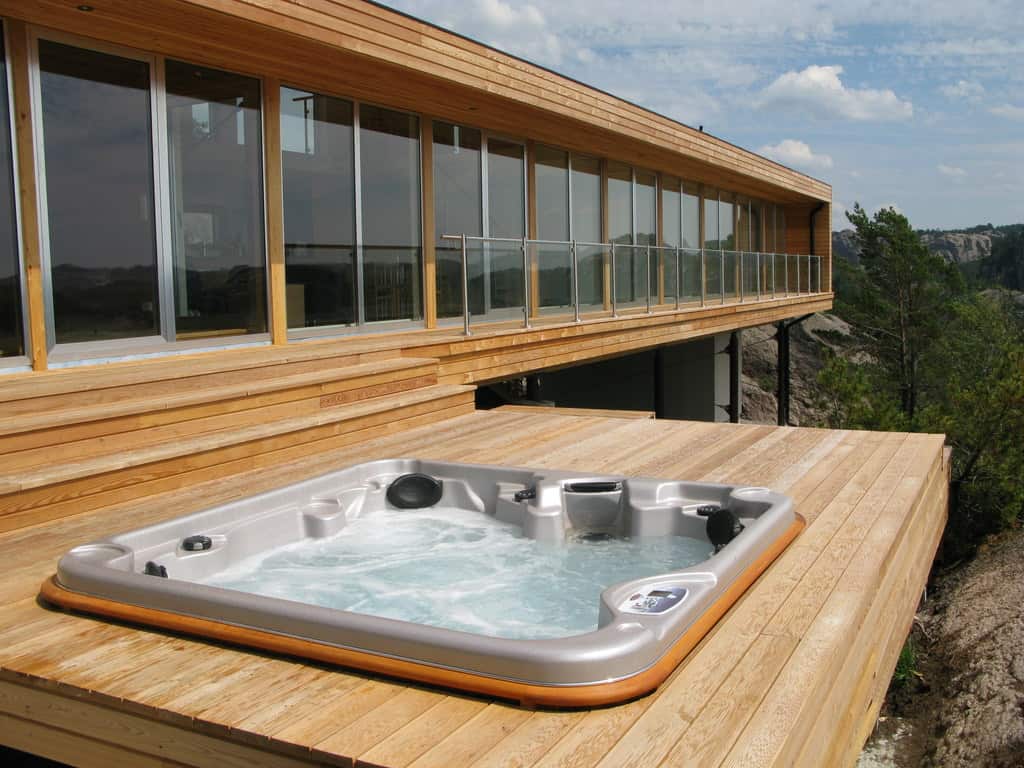
Many homeowners want to integrate the hot tub into an existing or new wood deck. This is entirely feasible, but the deck must be structurally rated for the load. Standard residential decks are not designed to support the weight of a filled hot tub.
A structural engineer or experienced deck builder should assess any existing deck before a hot tub is placed on it. If the deck needs reinforcement, that work must be completed before delivery day. Post-to-footing sizing, joist spacing, and beam sizing all affect whether the deck can safely hold the spa weight.
Spa Pads and Modular Bases
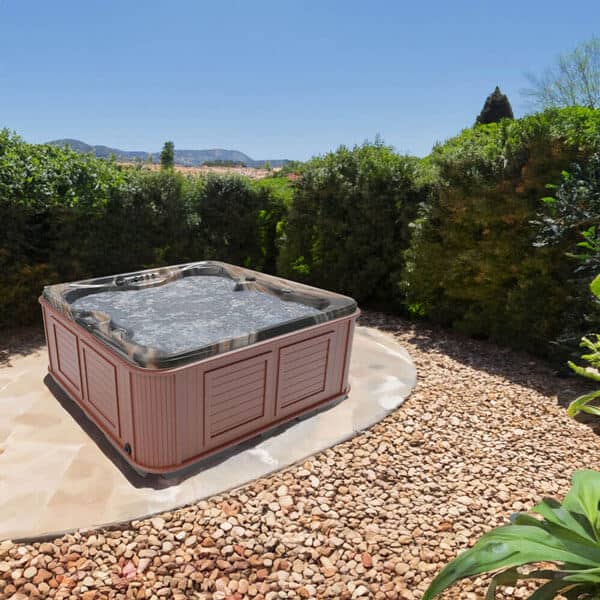
Spa pads - modular plastic or composite bases designed specifically for hot tub installation - are a viable option for smaller spas or temporary installations. They are faster and less expensive than concrete and can be installed without professional contractors.
The key limitations: they are less resistant to movement in freeze-thaw conditions than concrete, and they are best suited to relatively level ground that has been properly prepared with compacted gravel or similar. On uneven or soft ground, they are not appropriate.
Paving Stones and Hardscaping
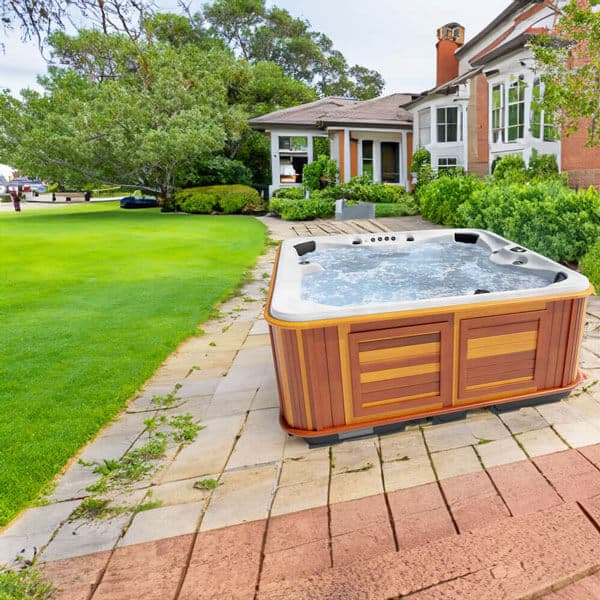
Paving stones laid on a properly compacted and leveled base can support a hot tub in some conditions. The key is ensuring the sub-base is genuinely stable and that the paving stones are laid with minimal gap between them so the spa cabinet sits evenly across the surface.
Movement between individual paving stones over time can create unevenness. For permanent installations, concrete is more reliable. For a homeowner who already has an established paver patio in good condition, it may be appropriate with proper assessment.
The Leveling Requirement
Whatever base material you choose, it must be level. A hot tub placed on an unlevel surface drains incompletely (water pools at the low end when drained), the cover may not close properly, and in some configurations the uneven load distribution stresses cabinet components.
Check the level before delivery. If the surface is not within a few millimeters of flat, address it before the spa arrives - correcting it after the spa is in place is much more difficult.
Clearance Requirements
The spa base itself is not the only space consideration. You also need adequate clearance around the perimeter for cover removal and operation, for access by service technicians, and ideally for comfortable entry and exit.
Arctic Spas recommends at least 60cm of clearance on each side, with more preferred on the access panel side. Factor this into your base sizing so the spa is not placed against a fence or wall in a way that prevents normal service access.
Planning Your Base Before Delivery
Poolboy conducts a pre-delivery consultation to confirm site readiness before your spa arrives. This is the time to identify any issues with the planned base location, access route to the installation site, and electrical readiness.
Having the base completely finished and electrical work completed before delivery day makes the installation smooth and efficient. Delivery crews cannot wait for construction to be completed on arrival day.
New Brunswick Perspective
The most common delivery-day problem we see at Poolboy is a site that is not ready. The spa arrives, and the base is not finished, or the electrical is not done, or there is no clear access route. All of these can cause delays and complications that are entirely avoidable with proper advance planning. The pre-delivery consultation is designed to catch these issues before they become problems - take full advantage of it.
Frequently Asked Questions

Flexible Payments on Any Arctic Spas Hot Tub
Take advantage of the most competitive financing rates through FinanceIt. Apply online in minutes and get a fast decision - no pressure, no commitment.
Visit a Poolboy Showroom in New Brunswick
Our team in Fredericton and Moncton can answer your questions, show you the full Arctic Spas lineup, and help you find the right fit for your home.